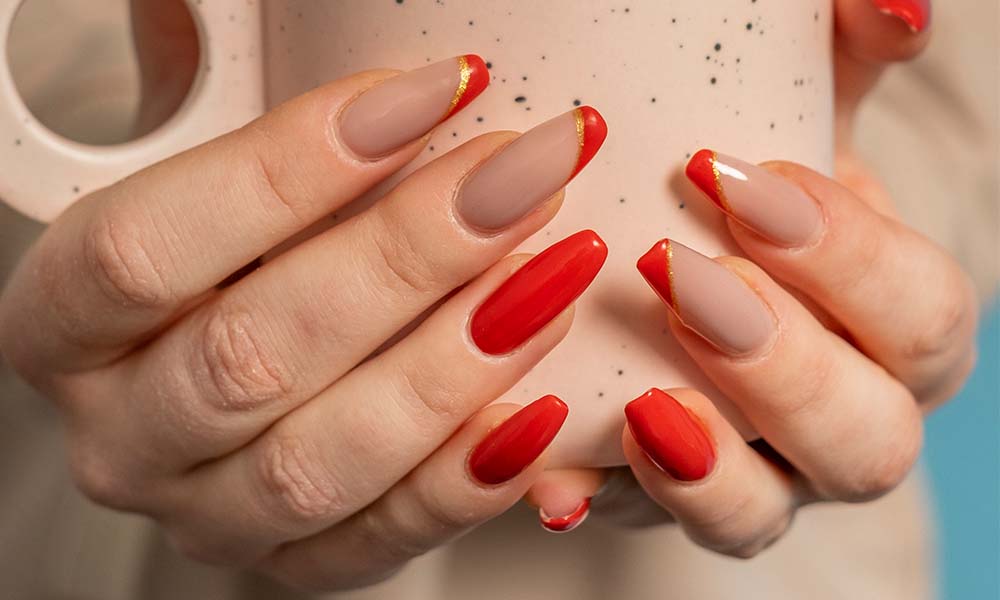
I still remember the first time I tried artificial nails. I was excited for long, perfect-looking nails without the wait. But within a week, two had popped off, one had lifted at the edge, and my natural nails underneath felt thin and sensitive. I thought artificial nails just weren’t for me.
Turns out, I just didn’t understand the options—or how to care for them properly.
Artificial nails come in several types, each with its own strengths and weaknesses. Choosing the right one for your lifestyle and learning how to apply, wear, and remove them safely makes all the difference.
Here’s everything I’ve learned about adhesive nails, gel nails, and resin nails—so you can enjoy beautiful extensions without damaging your natural nails.
The Three Main Types of Artificial Nails
1. Adhesive Nails (Press-Ons)
These are pre-shaped plastic nails that come with adhesive tabs or require nail glue. You simply stick them onto your natural nails.
How they work: Clean your natural nail, apply the adhesive (either a sticky tab or liquid glue), press the false nail on, and hold for 30 seconds. No lamp, no curing, no drying time.
Best for: Short-term wear (1-7 days), special events, or trying a shape/color without commitment. Also great for beginners.
Pros:
- Fastest application (5-10 minutes for a full set)
- No UV lamp needed
- Easy to remove (soak in warm soapy water or use adhesive remover)
- Affordable and widely available
- Reusable if removed carefully
Cons:
- Least durable (can pop off if you’re rough with your hands)
- Adhesive tabs don’t hold up well to water
- Glue-on versions can damage nails if peeled off
- Limited customization (you get what’s in the pack)
2. Gel Nails (Soft Gel Extensions)
These are extensions created using a thick gel that hardens under a UV or LED lamp. They can be applied over natural nails or used with tips to add length.
How they work: A base coat is applied and cured. Then builder gel is sculpted onto the nail (either freehand or using a form), shaped, cured, filed, and finished with color and top coat.
Best for: People who want longer-lasting (2-4 weeks), lightweight, natural-looking extensions.
Pros:
- Lightweight and flexible (feels more natural than acrylic)
- Odor-free application
- Self-leveling (easier for beginners to get a smooth surface)
- Soak-off removal (no filing down to natural nail)
- Wide range of colors and effects
Cons:
- Requires UV/LED lamp (initial investment)
- Application takes 45-90 minutes
- Can peel if applied over oily nails or with poor prep
- More expensive than press-ons
3. Resin Nails (Acrylic or Dip Powder – Sometimes Called “Resin System”)
Resin nails typically refer to a two-part system: a liquid monomer and a powder polymer that form a hard bead, which is sculpted onto the nail. Dip powder is a similar concept but uses a colored powder and a resin activator.
How they work: A primer is applied, then a brush dipped in liquid and powder creates a bead that’s placed on the nail. The bead hardens in air (no lamp needed for traditional acrylic; dip requires a curing step). Then it’s filed, shaped, and polished.
Best for: Maximum durability and length. Popular in salons for those who want strong, long-lasting nails.
Pros:
- Extremely strong and durable (can last 3-6 weeks)
- Can extend nails significantly
- No lamp required for traditional acrylic (though dip may use a curing light)
- Repairable (cracks can be filled without removing the whole nail)
- Widely available in salons
Cons:
- Strong odor during application (monomer smell)
- Must be removed with a nail file (soak-off not possible)
- Hard and inflexible (can snap under pressure, damaging natural nail)
- More aggressive prep (buffing and primer can thin natural nails)
- Higher risk of allergic reactions to liquid monomer
Artificial Nails: The Pros and Cons at a Glance
| Feature | Adhesive (Press-On) | Gel | Resin (Acrylic/Dip) |
| Durability | Low (days) | Medium (2-4 weeks) | High (3-6 weeks) |
| Application time | 5-10 min | 45-90 min | 60-90 min |
| Removal | Soak in warm water | Acetone soak | Filing only |
| UV lamp needed? | No | Yes | No (acrylic), Yes (dip) |
| Odor | None | None | Strong (acrylic) |
| Flexibility | Rigid but thin | Flexible | Hard and brittle |
| Natural nail damage risk | Low (if removed gently) | Medium (if peeled) | High (if filed aggressively) |
How to Avoid Damage to Your Natural Nails
Artificial nails themselves aren’t dangerous. What causes damage is poor application, improper removal, and neglect.
Choose the Right Type for Your Lifestyle
If you’re hard on your hands (gym, manual labor, frequent water exposure), gel or acrylic may last longer. If you want occasional glamour, press-ons are safer and gentler.
Never Skip the Prep
All artificial nails require a clean, dry, lightly buffed nail surface. But over-buffing is a common mistake. Buff just enough to remove shine—not to thin the nail. Use a fine-grit buffing block (240+).
Avoid Getting Product on Skin
Gel, resin, and glue that touch your skin can cause contact dermatitis over time. Clean up any spills before curing or drying.
Don’t Wear Them Too Long
Artificial nails should be removed or filled every 2-4 weeks, depending on growth. Wearing them longer increases the chance of lifting, trapping moisture, and developing greenies (bacterial infection) or fungus.
Never Peel Them Off
Peeling artificial nails rips off layers of your natural nail. Always follow the proper removal method (soak-off for gel, filing for acrylic, warm water for press-ons).
Give Your Nails a Break
After removing a set of artificial nails, take at least a week of bare, oiled nails. This allows your natural nails to rehydrate and recover. Apply cuticle oil daily during the break.
Watch for Allergic Reactions
If you notice redness, itching, swelling, or lifting around the nail bed, you may have developed an allergy to gel or acrylic ingredients. Remove the product immediately and consult a doctor. Allergies can be permanent, so prevention is key.
How to Care for Artificial Nails (Once They’re On)
Proper maintenance extends the life of your artificial nails and protects your natural nails underneath.
Keep Them Dry
Water seeps under lifted edges and causes bacteria growth. Wear gloves for dishwashing, cleaning, and showering (if possible). Pat nails dry immediately after any water contact.
Apply Cuticle Oil Daily
Oil keeps the skin around your nails flexible and prevents lifting at the base. It also nourishes your natural nail beneath the artificial layer. Apply morning and night.
Don’t Use Nails as Tools
No opening cans, peeling stickers, or scraping. Artificial nails are thicker than natural nails but can still break—and when they break, they often take a layer of natural nail with them.
Be Gentle with Filing
If you need to shorten or reshape artificial nails, use a fine-grit file and file in one direction. Coarse files create rough edges that snag and lift.
Moisturize Your Hands
Dry hands lead to dry cuticles, which can lift artificial nails from the base. Use hand cream throughout the day.
Watch for Lifting
If you see an edge lifting, don’t ignore it. Moisture and bacteria can get trapped underneath. For press-ons, remove and reapply. For gel or acrylic, a professional can fill the lifted area.
Safe Removal Methods by Type
| Artificial Nail Type | Safe Removal Method |
| Adhesive (tabs) | Soak in warm soapy water for 10-15 minutes, then gently peel off tab. |
| Adhesive (glue) | Soak in acetone for 10-15 minutes, then gently push off. |
| Gel (soft) | File off top coat, soak in acetone 15-20 minutes, gently push. |
| Resin (acrylic) | Must be filed off by a professional or with an e-file at low speed. Do not soak. |
| Dip powder | Similar to gel—soak in acetone after filing the top layer. |
The Bottom Line
Artificial nails can be a fun, beautiful way to enjoy length and color that your natural nails can’t provide—yet. The key is choosing the right type for your needs, applying and removing them safely, and giving your natural nails regular breaks.
Adhesive press-ons are perfect for short-term events. Gel nails offer a lightweight, natural feel for weeks. Resin (acrylic) nails provide maximum strength for those who need durability.
Whichever you choose, treat your artificial nails with respect. Your natural nails underneath will thank you.
Read also: Soft Nails: Causes, Cures, and How to Build Resilience
